[How To]How to Fix System Restore Point Fail?
Answer
Windows System Restore can restore system files, registry settings, and installed programs to an earlier restore point. It is useful for troubleshooting system issues caused by software installation, driver updates, or changes to system settings.
System Restore generally does not affect personal files, such as documents, photos, or other personal data. However, System Restore may fail to complete in certain situations, for example:
1. The restore point was created a long time ago, or the restore point itself has encountered an issue.
2. After Windows has undergone a major update, older restore points may no longer work properly.
3. Third-party antivirus or security software may prevent System Restore from accessing required system files.
This article applies to MSI laptops running the Windows 11 operating system
If System Restore fails, follow the troubleshooting methods below in order:
Method A: Run System Restore again and select another restore point
If the currently selected restore point cannot be used properly, try selecting another restore point.
1. Press Windows + R on the keyboard.
2. Enter rstrui.exe, then press Enter.
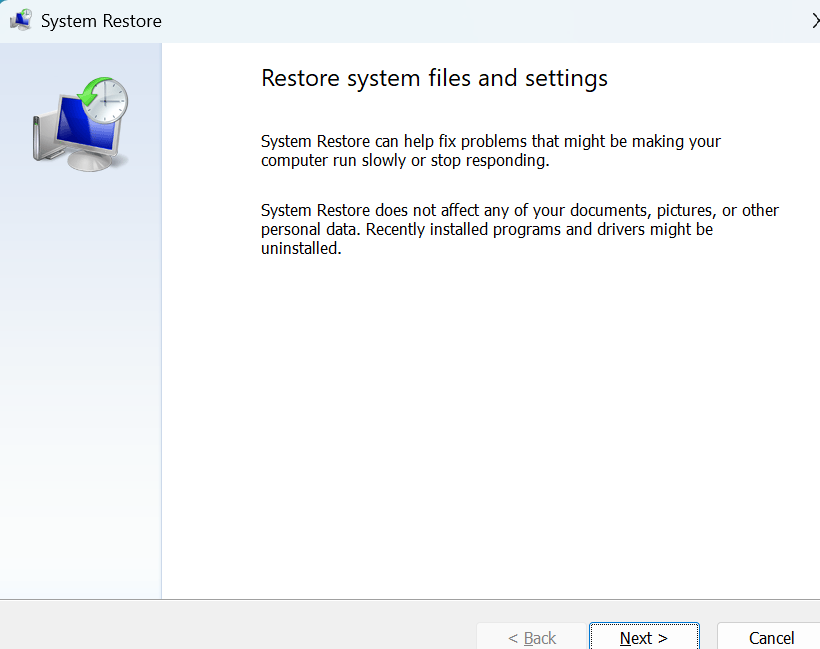
3. In the System Restore window, select Next.
4. Select another available restore point, then select Next.
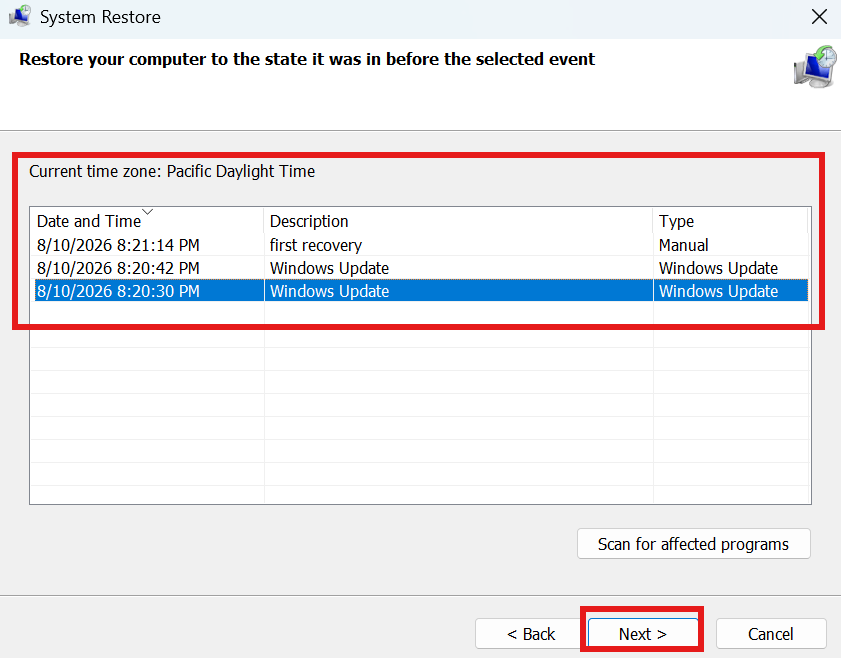
5. Confirm the restore point information, then select Finish.
6. Wait for Windows to complete System Restore.
Note:It is recommended to select a more recent restore point that was created before the problem occurred. Do not force the computer to shut down while System Restore is running to avoid causing additional system issues.
Method B: Temporarily disable third-party antivirus software and run System Restore again
Third-party antivirus software may prevent System Restore from accessing or modifying protected system files, as shown in the image below.
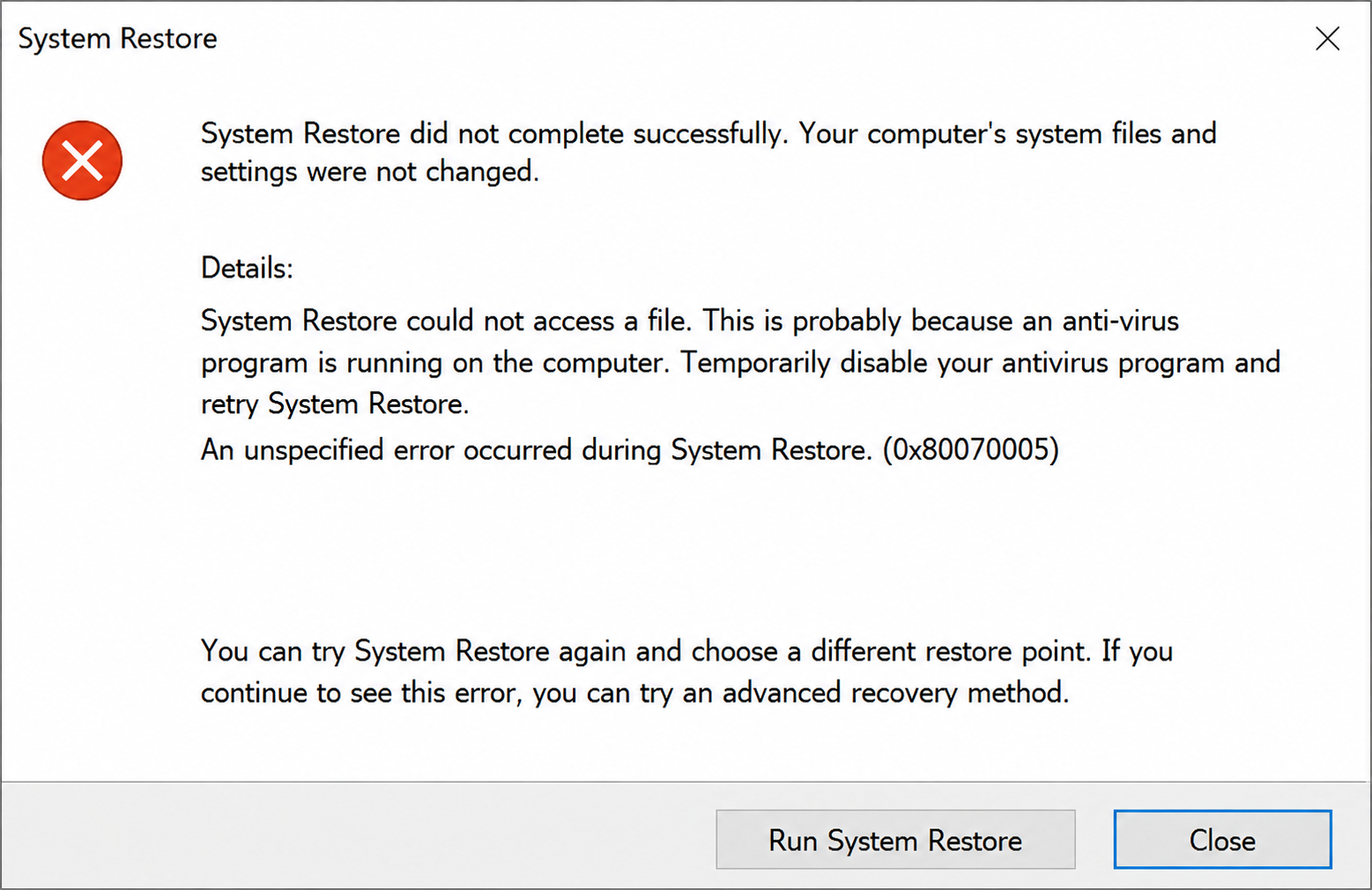
If System Restore continues to display 0x80070005 or a similar file access error, and third-party security software such as Norton, McAfee, or Avast is installed on the computer, you can try temporarily disabling the related protection features and then run System Restore again.
Note:Temporarily disabling antivirus protection may reduce the security of your computer. After System Restore is completed, immediately re-enable the protection that was previously disabled.
If you are using Norton, follow the steps below:
1. Open the Norton application.
2. Select Settings on the Norton main screen.
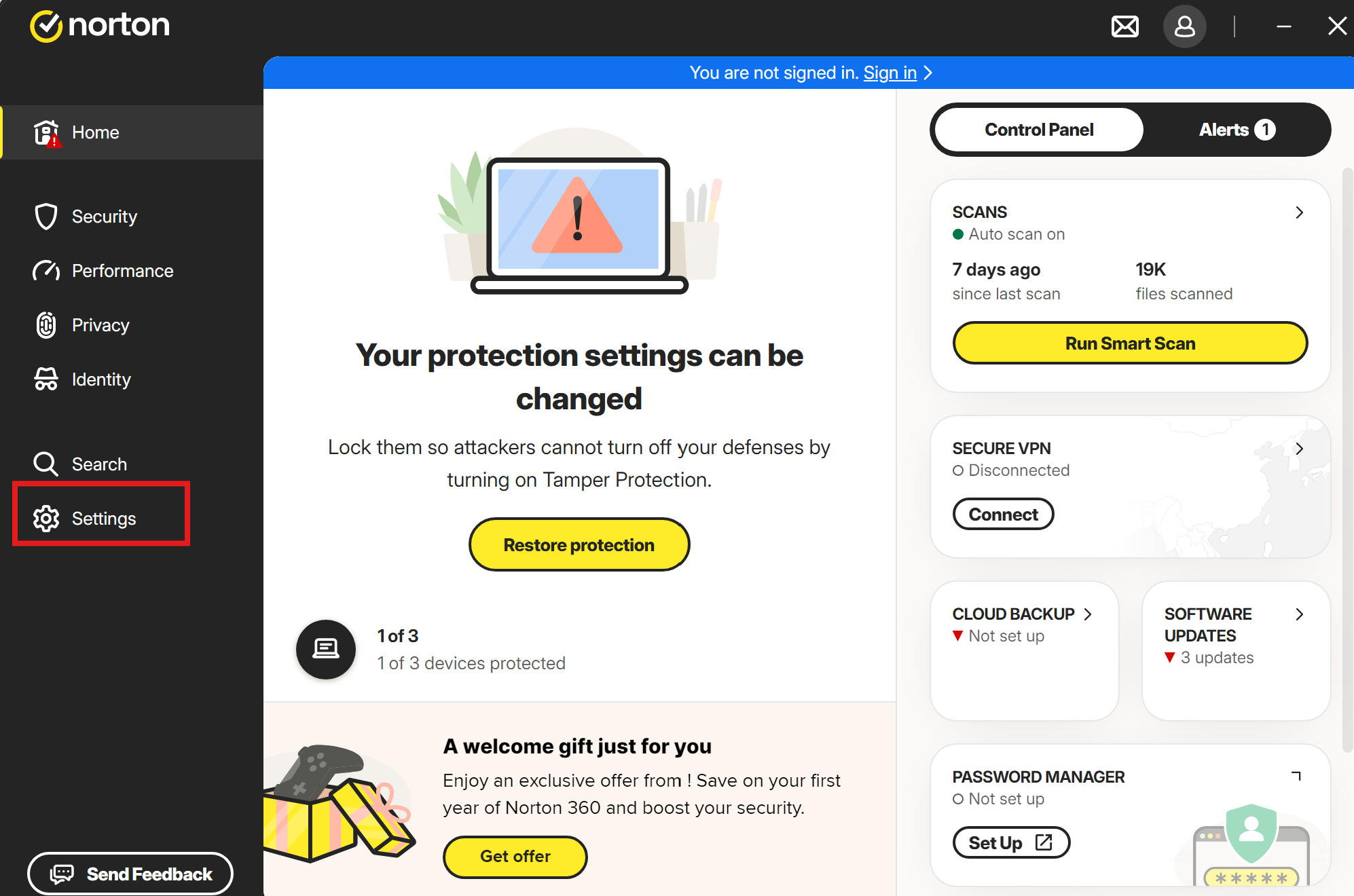
3. Select General on the Settings page.
4. Locate Norton Product Tamper Protection.
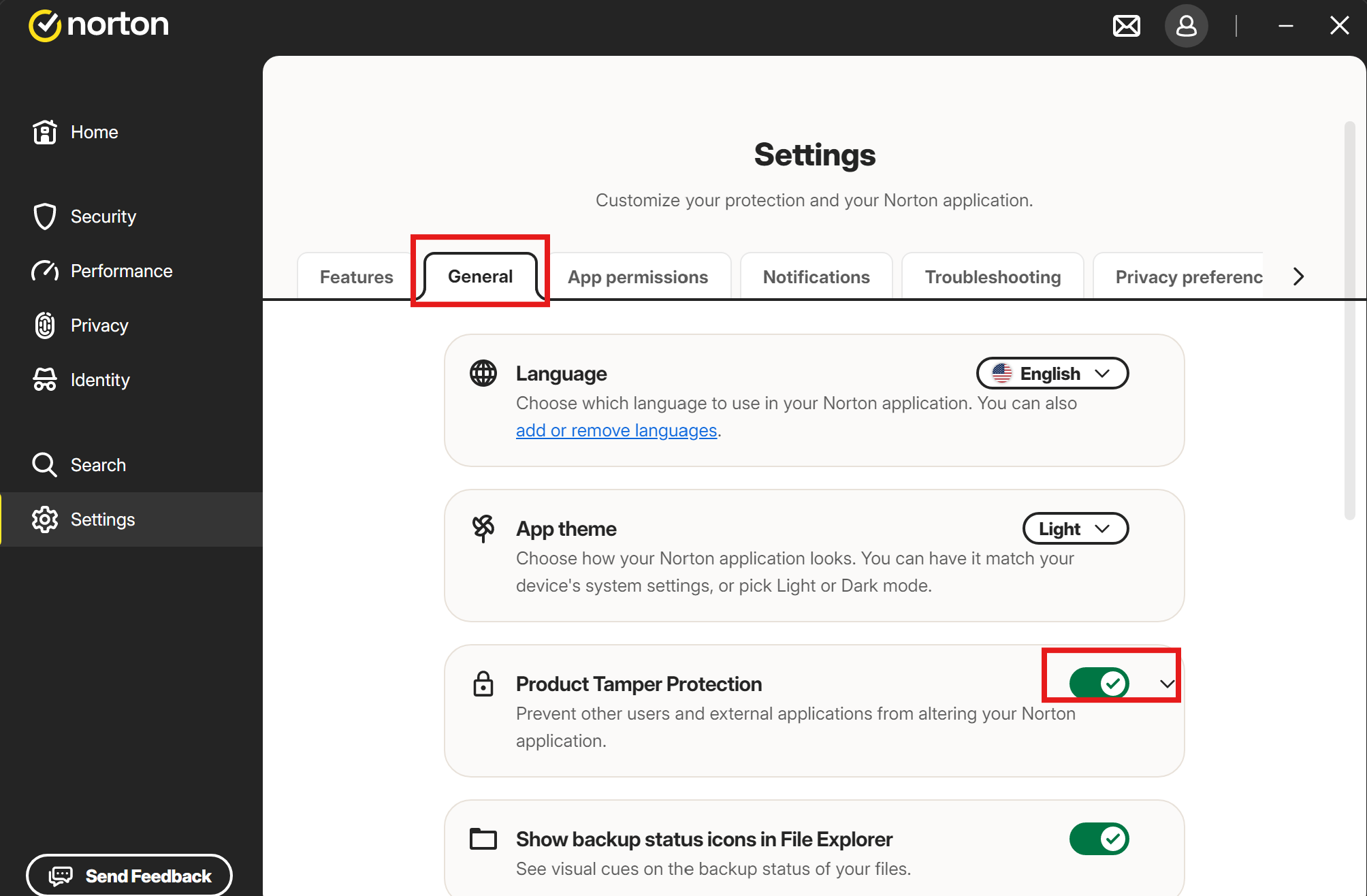
5. Temporarily disable the related protection feature according to the options available in your version of Norton.
6. If confirmation is required, follow the on-screen instructions to complete the operation.
7. Close or minimize Norton.
8. Run System Restore again.
9. Wait for System Restore to complete.
10. After System Restore is completed and Windows starts again, re-enable the Norton protection feature that was previously disabled.
Note:The settings interface may vary depending on the Norton product version or subscription plan,and some settings may not be available.
FAQ
Q: Why can selecting another restore point resolve System Restore failures?
A: Different restore points represent the system state at different points in time. If the currently selected restore point is corrupted or its system files cannot be accessed properly, System Restore may fail. Selecting another restore point can help rule out an issue with the specific restore point.
Q: Can I still use a System Restore point after Windows has been updated?
A: You can try, but not all older restore points are guaranteed to complete successfully.
If the problem started after a Windows update, driver update, or software installation, it is recommended to select a restore point that was created before the problem occurred. This allows the system to be restored to a state before the problem occurred and can help rule out issues caused by recent system changes.
Q: Are there other Windows recovery options if System Restore continues to fail?
A: Yes. Windows provides several recovery options. Select the appropriate option based on the actual issue:
1)System Restore: Settings → System → Recovery → System Restore.
2)Startup Repair: Settings → System → Recovery → Advanced startup → Restart now → Troubleshoot → Advanced options → Startup Repair.
3)Uninstall Updates: Settings → Windows Update → Update history → Uninstall updates.
4)Reset this PC: Settings → System → Recovery → Reset this PC.
5)Windows Recovery Environment (WinRE): Settings → System → Recovery → Advanced startup → Restart now → Troubleshoot → Advanced options.
If System Restore does not resolve the issue, select the appropriate recovery option based on the actual problem instead of repeatedly trying the same restore point.
If the above answers do not resolve your issue, please
Contact Us