
[Power Supply] What Does "80 PLUS" Mean on a Power Supply?
"80 PLUS" refers to an energy efficiency certification program specifically designed to evaluate and certify the efficiency of computer power supplies (PSUs). The primary goal of this program is to encourage manufacturers to produce power supplies with improved efficiency, thereby reducing energy waste and minimizing environmental impact.
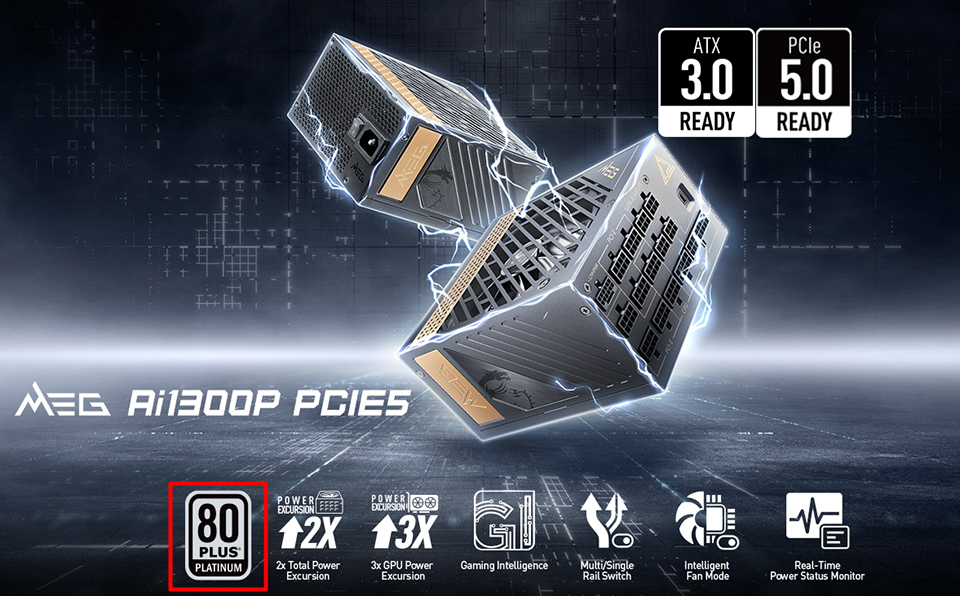
The 80 PLUS certification program categorizes power supplies into several levels: White, Bronze, Silver, Gold, Platinum, and Titanium. The higher the level, the more stringent the efficiency requirements become for the power supply under different loads.
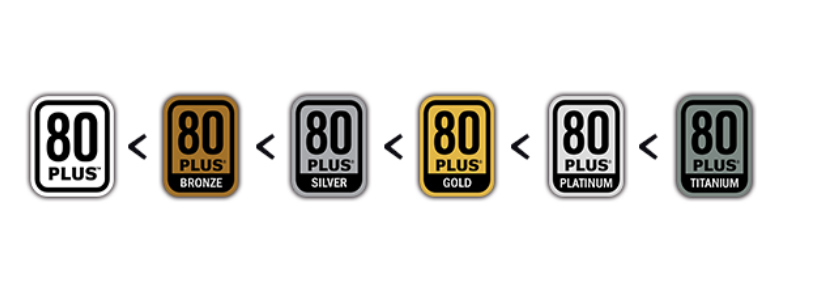
80 PLUS White: This is the minimum requirement, with the power supply's efficiency needing to be at least 80%.
80 PLUS Bronze: The efficiency must be at least 82%.
80 PLUS Silver: The efficiency must be at least 85%.
80 PLUS Gold: The efficiency must be at least 87%.
80 PLUS Platinum: The efficiency must be at least 90%.
80 PLUS Titanium: The efficiency must be at least 92%.
In simple terms, a higher certification level indicates that the power supply is more efficient in converting electrical energy. This not only helps save on energy costs but also contributes to reducing heat and noise generation.
For instance, consider a computer requiring 600W of power. If you use an 80 PLUS White power supply with an efficiency of 80%, the power supply must be rated at least 750W. This additional capacity accounts for the 150 watts that will be converted into heat or other forms of energy during operation. (750W * 80% = 600W)