Two-wheeler Telematics control unit development and application
AIoT Solutions
Due to the gradual consensus among the general public on environmental protection awareness, electric two-wheeled vehicles have become the preferred means of short-distance urban travel, leading to an increasing market demand. However, the large number of electric two-wheeled vehicles poses practical challenges in maintenance and management for both individual and commercial operations. Consequently, there is a growing need for a real-time monitoring and vehicle management solution, making the remote information controller a crucial requirement for the future of this industry.
What’s the Two-Wheeled Vehicle Remote Information Controller?
The Two-Wheeled Vehicle Remote Information Controller is primarily a remote monitoring system that collects various data from installed vehicles, including travel distance, speed, battery level, and location. This data is transmitted wirelessly to an operational cloud platform for data analysis and application. The controller's functionalities include remote monitoring, remote fault diagnosis, statistical data analysis, and more. These features significantly contribute to enhancing the personal user experience and adding value to commercial services.
Commercial Value of the Two-Wheeled Vehicle Remote Information Controller:
1. Data Collection and Transmission Technology:
The controller collects operational data from vehicles and wirelessly transmits it to the cloud platform. Developers need expertise in wireless communication technologies such as Bluetooth, Wi-Fi, GNSS, 4G/5G, and the latest application of UWB wireless communication. This hardware and software integration enables efficient data exchange for effective data collection and transmission.
2. Remote Monitoring and Fault Diagnosis technology:
The controller facilitates remote monitoring and fault diagnosis of vehicles. Developers are required to develop corresponding software interfaces to analyze and diagnose information from internal monitoring devices within bicycles. This includes providing relevant troubleshooting solutions to optimize business efficiency.
3. Security and Anti-Theft Technology:
The controller ensures vehicle security and anti-theft functionality through integrated applications such as positioning systems and sensors. This creates various theft prevention mechanisms, ensuring economic value in both personal and business operations.
In addition to these fundamental functionalities, the industry is gradually incorporating other business applications to make the product more versatile.
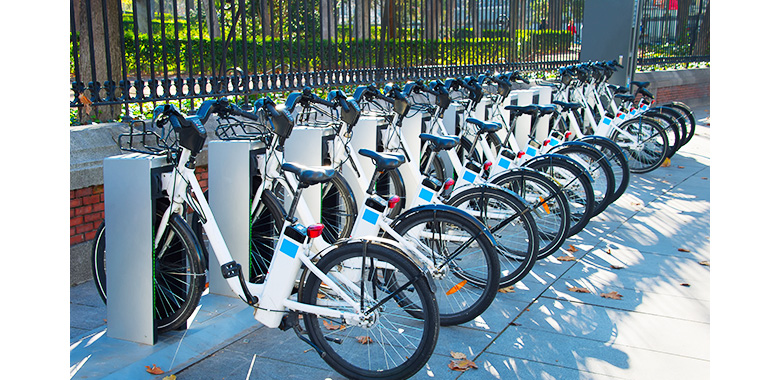
1. Search and Management for Bike-Sharing Enterprises and Private Use, Theft Prevention, and Humanitarian Rescue:
The introduction of UWB positioning technology into the Telematics box allows for precise vehicle positioning. UWB, combined with GPS, achieves accurate location functions, surpassing traditional GPS technology in precision. UWB's short-range, high-precision positioning capabilities prove beneficial for bike-sharing enterprise management, efficient enterprise leasing management, and humanitarian rescue efforts.
2. Efficient Management in Enterprise Leasing:
In cities with high electric two-wheeled vehicle usage, where GPS accuracy may be affected, UWB technology enhances the search efficiency. It allows for precise short-range positioning, overcoming obstacles like walls, ensuring high-precision location and management efficiency in shared or enterprise leasing scenarios.
3. Securing Golden Time in Humanitarian Rescue:
For private users in remote or wooded areas, the Telematics box aids in precise location information during rescue missions, significantly enhancing the efficiency of relevant units.
4. Various Designs for Telematics Box:
The modular design, coupled with innovative heat dissipation mechanisms, allows integration in different parts of electric two-wheeled vehicles. This ensures resilience under extreme conditions, meeting the demanding usage scenarios of electric two-wheeled vehicles.
5. Safety Mechanisms for Electric Two-Wheeled Vehicles:
The UWB technology, combined with a simple mobile phone application, enhances security by measuring the proximity of the owner. This ensures a more technologically advanced and efficiently managed unlocking process compared to traditional mechanical locks.
As more commercial activities adopt and apply these technologies:
1. Rental Industry:
The Telematics Box assists rental companies in better managing vehicles and providing improved services through precise positioning and driver analysis.
2. Delivery Industry:
With the popularity of online shopping, the Telematics Box aids delivery companies in efficient vehicle management, improving delivery efficiency, and service quality.
3. Logistics Industry:
The Telematics Box offers accurate driving analysis and risk assessment, assisting insurance companies in evaluating risks and formulating insurance plans.
The design and development of MSI's Automation Business Application Solutions primarily focus on embedded platforms as the main system architecture. It extends to different functionalities and products related to vehicles, adhering to industrial-grade standards and meeting various IATF 16949 quality system requirements. With the support of MSI's comprehensive hardware and software team, customers can receive optimal ODM services and manufacturing quality, rapidly entering the market with the fastest development speed to gain market share and profitability.
To obtain further details, please visit the website:
https://acs.msi.com/product/IoT-Box-MS543
https://acs.msi.com/product/IoT-Box-MS543