What is the Industrial Gateway?
AIoT Solutions
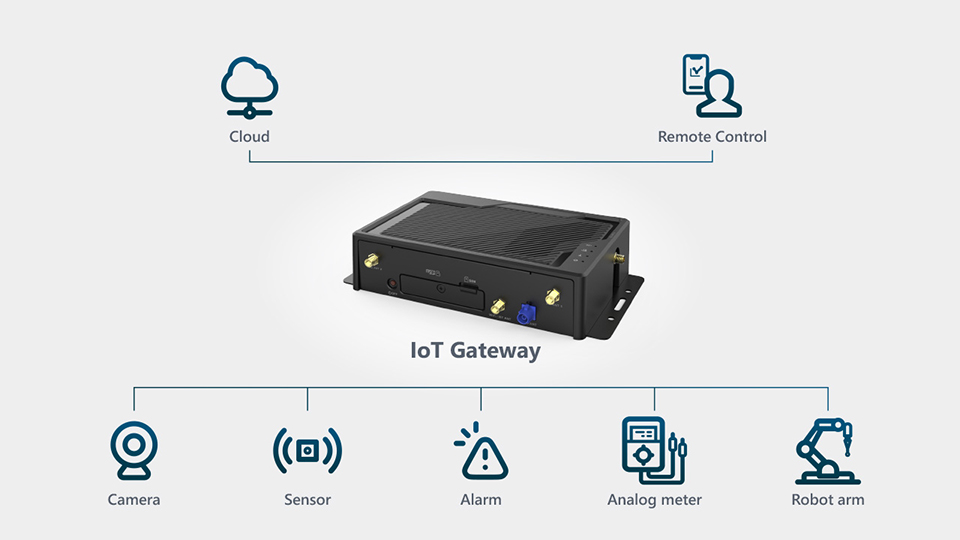
An industrial gateway is a crucial component in the realm of industrial IoT (Internet of Things). It serves as a bridge between various devices, sensors, and the cloud, enabling seamless communication, data collection, and transmission within an industrial setup. Essentially, it acts as a centralized hub, collecting data from connected devices or sensors within a factory or industrial environment.
Industrial gateways typically offer functionalities like data aggregation, protocol translation, edge computing, security measures. They often act as a buffer, processing data locally before transmitting it to the cloud or a central server. Serving as a critical role in ensuring data integrity, security, and efficiency in industrial settings, industrial gateway enable real-time monitoring, analysis, and control of machinery and processes.
With all those functionalities mentioned above, industrial gateway can resolve several common but critical IoT challenges:
- Interoperability: IoT devices often use diverse communication protocols, making seamless connectivity a challenge. Industrial gateways act as intermediaries, enabling communication between devices that use different protocols. They translate and standardize data formats, ensuring interoperability across various devices and systems within an IoT ecosystem.
- Edge Processing and Data Management: IoT generates vast amounts of data, often overwhelming networks when transmitted to centralized servers. Industrial gateways facilitate edge computing, processing data closer to its source. This localized processing filters, aggregates, and analyzes data, reducing bandwidth usage, lowering latency, and sending only relevant information to the cloud or central servers.
- Security Enhancement: Security is a critical concern in IoT due to the vulnerability of connected devices. Industrial gateways serve as security checkpoints, implementing encryption, authentication, and access control measures. They provide a secure gateway, filtering and safeguarding data before transmitting it to prevent unauthorized access or cyber threats.
- Reliability and Connectivity: IoT devices often encounter connectivity issues in remote or challenging environments. Industrial gateways enhance connectivity by using stronger communication modules or protocols. They ensure reliable communication between devices even in areas with weak network coverage, maintaining consistent data flow.
- Scalability and Flexibility: As IoT ecosystems expand, scalability becomes crucial. Industrial gateways are designed to adapt and scale, accommodating a growing number of devices and varying requirements. Their modular designs allow for easy integration of additional functionalities, supporting the evolving needs of IoT applications.
MSI Solution - 5G IoT Gateway
MSI has been devoted into gateway solution for several years and has accumulated experience with many business partners. One of the newest and cutting-edge solution is the MSI 5G IoT gateway. It stands as a testament to technological innovation, embodying a holistic solution tailored to the intricate demands and challenges pervading the IoT landscape. Its specifications and functions converge to offer a comprehensive and robust platform that encapsulates adaptability, security, seamless connectivity, and multifunctional capabilities essential for the modern industrial ecosystem.
At the core of its capabilities lie the specifications that define its prowess. The device’s compliance with diverse global radio regulations underscores its universal compatibility, facilitating streamlined operations in varied network environments across the globe. Bolstering its connectivity, the incorporation of 4G/5G full wireless communication modules elevates industry standards, ensuring fluid transitions between varying signal types—5G/4G/3G—while accommodating multiple device connections without compromising data transmission stability. Augmenting its connectivity spectrum, the support for dual-band Wi-Fi (2.4G/5G) enhances adaptability across diverse frequency needs and network architectures.
A hallmark feature of the MSI 5G IoT gateway is its flexibility and scalability. The device’s modular architecture accommodates additional modules, such as Wisum, Enocean, and LPWA, empowering tailored customization for diverse application areas. This adaptability ensures the device’s evolution to meet the dynamic needs of various industries, underscoring its role as a versatile and future-ready solution. Furthermore, its ruggedness cannot be overlooked, operating within a wide temperature range (-20°C to 70°C), enduring vibrations (up to 2.8 G), and withstanding shocks (up to 50 G), guaranteeing reliability and durability even in the most demanding industrial settings.
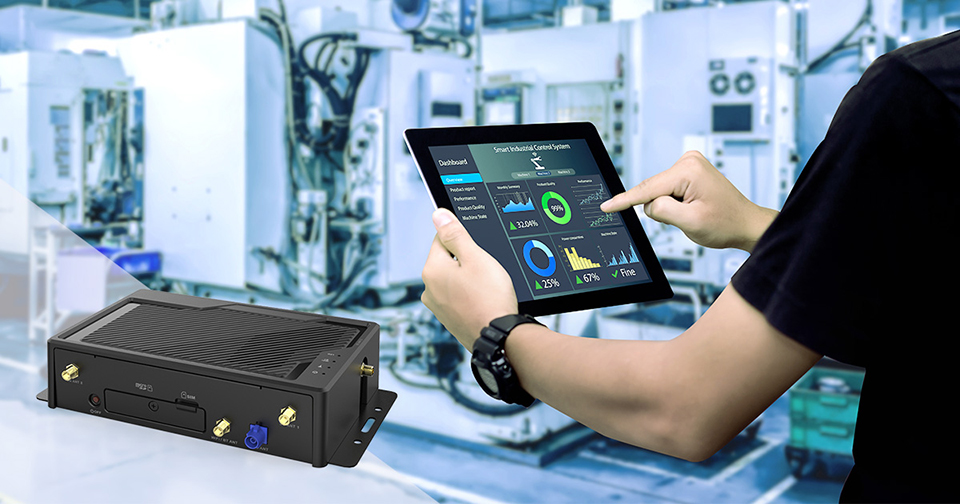
The device further empowers owners by enabling remote operational control, offering a vantage point to oversee and manage operations from remote locations. This functionality enriches operational agility and responsiveness, pivotal in adapting to the ever-evolving industrial landscape. Furthermore, its compatibility with various VPNs fortifies communication security and fosters seamless integration with other workplace devices, facilitating 5G intranet VPN connections and enhancing the ecosystem's security and cohesion.
In conclusion, the MSI 5G IoT gateway industrial gateway represents a pinnacle of technological innovation, amalgamating adaptability, security, connectivity, and multifunctional capabilities crucial for the current industrial environment. Its robust and comprehensive feature set positions it as a transformative asset, poised to drive efficiency, automation, and connectivity within industrial and IoT ecosystems, paving the way for a more optimized and interconnected future.
For more details, please click on https://acs.msi.com/product/Commercial_Products/5G-IoT-Gateway-MS544