Spend enough time shopping for EV chargers, and you'll run into both single-phase and three-phase charging stations. The phase types refer to how electricity is delivered to the building or device from the power grid. For EV charging, the type of power supply at your location determines how fast a Level 2 charger can charge your vehicle and which models are compatible.
What is "Phase"?
Electricity moves in waves, and single-phase and three-phase refer to how many waves of power are moving. If you imagine a garden hose spraying a single stream of water continuously, you'll have a good idea of single-phase current. Then, imagine three hoses running at the same time. The water comes from the same pipe, but more is being delivered at once. More waves mean more power over the same period of time. More power means more charging.
Single-Phase Power
This is a single alternating current (AC) wave. In Australia and Europe, that wave is typically 230-240V. In the US, it's 120/240V. Single-phase power is the standard for almost all residential locations in the US and Australia and for the majority of homes in Europe. This means that EV charging is typically capped at 7.2-7.4 kW on a standard 32A circuit. In practical terms, that means 40-50 km (25-30 miles) of range per hour of charging. If you charge overnight on a single-phase Level 2 charger, you'll be just fine.
Three-Phase Power
In contrast, three-phase power is three alternating current waves running together. These waves deliver significantly more power over the same period of time. This is the power type for almost all industrial and commercial buildings, regardless of country. Some residential parts of Europe also have three-phase power, and it can be available upon request in many residential areas in Australia. Three-phase charging enables power output of either 11 kW on 16A or 22 kW on 32A. That boils down to about 120-130 km (75-80 miles) of range for every hour spent charging at 22 kW. While not DC-level high-speed charging, this is a significant boost over the slightly more than 7 kW on single-phase power.
How to Find Out What You Have
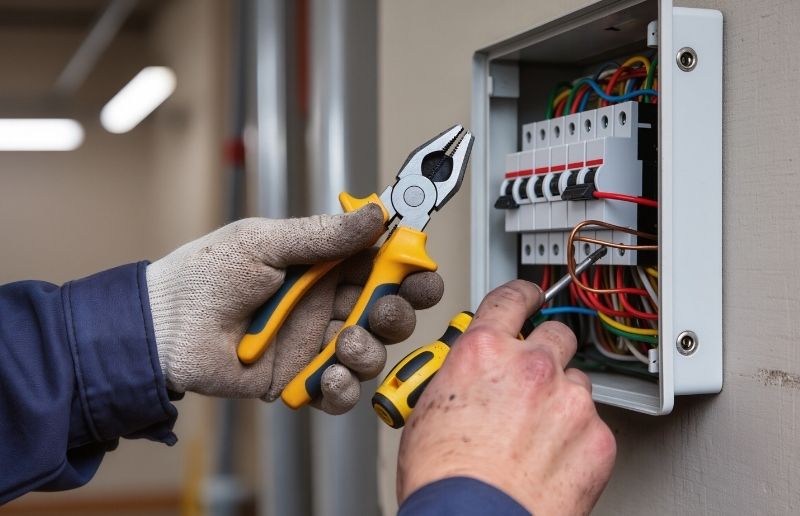
If you're not sure what kind of power your location has, there are a few ways to find out. First, check your electrical panel or meter box. Typical single-phase installations will have one or two main breakers while three-phase ones will have three. Second, check your utility bill or connection documentation. Your phase may already be listed on one of these. However, the simplest answer is to ask a licensed electrician. Any site assessment to install a hardwired EV charger will confirm power phase as one of the first steps.
If you're installing in Australia, three-phase power is often available from the network distributor, though there may be a connection cost. In Europe, if you live in a newer building or an urban area, you might already have three-phase and not know it. In the US, however, it's relatively uncommon to find three-phase power for residential sites. Commercial buildings, on the other hand, almost always have three-phase power available.
Does It Matter Which Charger You Buy?
Installing a three-phase charger on a single-phase power supply won't magically give you more charge. The power supply is still single-phase, so the charger will only deliver single-phase output regardless of its rating. Likewise, a single-phase charger installed on a three-phase supply will work, but it won't suddenly offer three-phase charging levels. The charger is limited by the power phase it was meant to process. The only reason to buy a three-phase charger if you're using single-phase power is if you're planning to upgrade the power supply later. Make sure you buy the right charger for your power supply and charging needs. The MSI Eco Series supports both single-phase and three-phase installations, so there is a model for wherever you plan to install.
Sum It Up
Whether you're installing single-phase or three-phase charging, you'll get a good charge overnight. Three-phase is particularly useful at commercial properties or workplaces where charging times may be shorter. It can also be worthwhile for guesthouses where multiple drivers may need to use the charger during an afternoon or evening. The right charger depends on your needs, your property, and your vehicle. If you're not sure, reach out to the MSI EVSE team, and we'll help you find the right fit for your location.