What Is the Best Gaming PC? A Deep Dive Into Prebuilt Components
Desktops
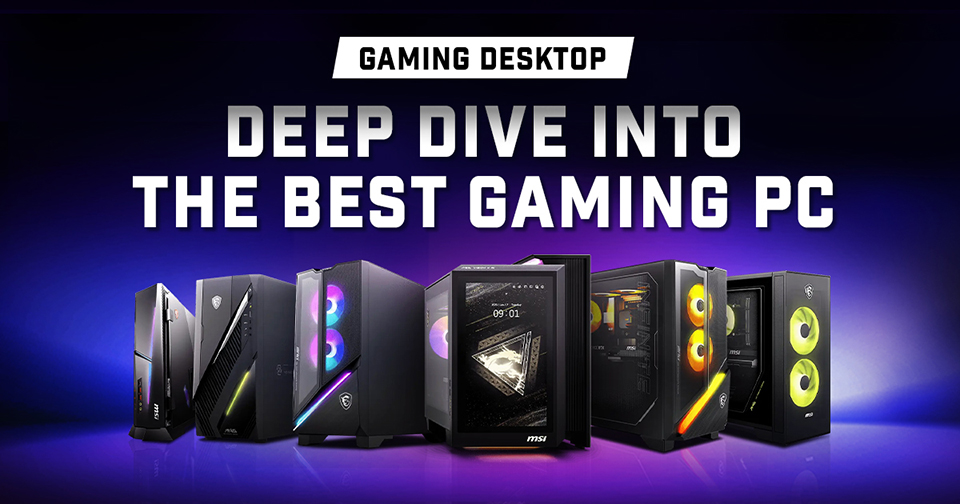
If you ask "What’s the best gaming PC?", the immediate response for years was almost always: "Just build it yourself." That used to be reasonable advice back when many traditional prebuilts treated gaming desktops like sealed appliances – flashy on the outside, but built with non-standard parts and limited upgrade paths.
But modern prebuilts have evolved over the years, and now many are built on the premise that buying a prebuilt shouldn’t mean compromising on what makes PC gaming great.
You’ll find that the prebuilt market mostly focuses on two distinct approaches:
- Prebuilts with standard, off-the-shelf parts: These systems use standard retail form factors (like ATX or microATX motherboards and power supplies). You get plug-and-play convenience, factory testing, and single-system warranty coverage, along with the flexibility to swap, repair, or upgrade any individual part down the line using standard retail components.
- Prebuilts with proprietary or specialized components: Some systems feature custom motherboard layouts, proprietary power connections, or unique compact chassis designs. While these specialized builds can enable or are necessary to achieve sleek aesthetics or smaller desk footprints, they can also affect long-term upgradability – meaning future upgrades may need more effort than a simple swap.
Finding the best gaming PC isn't just about chasing the biggest GPU badge on the box. It’s about understanding its foundation and picking a system that matches your performance needs alongside your future upgrade plans.
Here is a look at what sits behind the side panel, where component choices matter most, and how to choose a rig built to last.
The "Headline Spec" Trap
Walk into a retail store or browse online, and the pitch usually highlights a few major numbers:
"Intel Core i7 or AMD Ryzen 7! NVIDIA GeForce RTX 4070 or 5070! 32GB RAM! 2TB SSD!"
That sounds like a powerhouse gaming rig. But while those headline specs cover the primary hardware, they don’t tell the whole story about the system's power delivery, thermal headroom, motherboard features, or long-term upgradeability.
What about the power supply platform supporting that graphics card? How robust is the motherboard power delivery under sustained CPU workloads? What kind of airflow does the case offer, and how easily can you expand the storage or memory later?
When evaluating a prebuilt, it’s also important to check whether the supporting hardware uses industry-standard form factors or custom designs.
Proprietary parts aren’t inherently lower in quality – in fact, these custom designs can unlock ultra-compact footprints or cleaner cable routing. However, this does mean that you should factor this in when deciding on a PC, so you know exactly what can be upgraded down the road.
1. The Power Supply (PSU): Sizing and Electrical Headroom
Modern graphics cards draw significant power and can generate brief, millisecond-level power spikes during intense gameplay. When evaluating a prebuilt’s power supply, the key is ensuring it is properly matched to the hardware inside:
- Wattage and Headroom: Check that the PSU provides enough continuous wattage for your current CPU and GPU combination, with comfortable headroom if you plan to upgrade to a higher-tier graphics card later.
- Connectors and Standards: High-TDP modern graphics cards benefit from dedicated high-power connectors (such as native 12V-2x6 cables on ATX 3.0 and ATX 3.1 power supplies), while mainstream cards run reliably on standard 8-pin PCIe cables. Proper direct cabling eliminates the clutter and risk of multi-adapter splitters.
- Form Factor Considerations: Mid-tower desktops typically use standard ATX power supplies. Meanwhile, sleek small-form-factor systems may use SFX power supplies to deliver high power density within a compact, living-room-friendly chassis.
Make sure you check the manufacturer’s spec pages for as much information as you can find to make sure you can consider all these factors.
2. Motherboards and Power Delivery (VRMs)
The Voltage Regulator Modules (VRMs) surrounding your CPU socket regulate clean electrical current from the power supply to the processor. How much cooling a motherboard’s VRM needs will generally come down to the processor:
- Matching the CPU Tier: A mainstream 65W processor draws modest power and may run reliably on a standard motherboard without massive heatsinks. However, high-wattage, unlocked CPUs (like an Intel Core i7/i9 or AMD Ryzen 7/9) require quite a bit more power, especially under heavy multi-core workloads. For these chips, robust multi-phase VRMs and thick heatsinks prevent thermal throttling and enable better sustained performance.
- Standard vs. Specialized Layouts: Standard ATX and microATX boards ensure you can easily swap motherboards or cases in the future. At the same time, unique motherboard designs can offer a few advantages that aren’t accessible on standard parts. For example, MSI’s Project Zero motherboards (featured in systems like the MEG Vision X AI) move power, fan, and front-panel headers to the back of the PCB, resulting in an exceptionally clean interior with unobstructed airflow.
- Platform Longevity: Sockets like AMD’s AM5 (featured in desktops like the MSI MAG Infinite Z) and modern Intel LGA platforms offer clear multi-generation processor upgrade paths through simple BIOS updates.
3. Memory (RAM): Configuration, Bandwidth, and Upgrades
Memory capacity, DIMM configuration, and operating speed all influence real-world gaming performance:
- Single-DIMM vs. Dual-DIMM: Running memory in a dual-channel configuration (two matched sticks) doubles theoretical bandwidth, which helps smooth out minimum 1% low frame rates in memory-sensitive and CPU-bound titles. However, configurations shipping with a single 16GB stick offer a practical upside: they leave empty memory slots available, allowing you to easily double your RAM to 32GB later by adding a second matching stick without having to discard your original kit.
- Memory Speeds and Overclock Profiles: Standard JEDEC speeds provide stable, reliable performance out of the box for everyday gaming. For enthusiasts looking to maximize memory bandwidth, enabling Intel XMP or AMD EXPO profiles in the BIOS allows high-performance DDR5 kits to run at their advertised overclocked frequencies and tighter timings.
4. Cooling and Airflow: Balancing Thermals and Aesthetics
High-end gaming hardware produces substantial heat during extended play sessions. Keeping internal temperatures low and noise levels whisper-quiet is about smart airflow design, not just panel materials:
- Airflow in Panoramic Cases: Glass and panoramic "aquarium-style" cases are one of the most popular design trends in modern PC gaming. A glass front panel does not mean a system will run hot – as long as the case incorporates generous intake ventilation along the side, bottom, or top panels to maintain steady, positive airflow.
- Chambered Thermal Designs: Advanced thermal layouts, like MSI’s Silent Storm Cooling AI, isolate heat-generating components into separate thermal chambers. This allows for much lower temperatures, making the system cooler and quieter.
- Matching the Cooler to the Chip: Mainstream CPUs stay well within thermal limits using compact tower air coolers. Higher-wattage processors benefit from 240mm or 360mm all-in-one (AIO) liquid coolers (like the MAG CoreLiquid series) or large dual-tower heatsinks with ample thermal mass.
5. Component Upgradeability
Rather than viewing prebuilts as strictly "upgradeable" or "locked-down," it is best to evaluate upgrade paths component by component:
- Graphics Card Clearance: Check whether the chassis offers enough physical length and slot width for larger multi-fan GPUs, and confirm the power supply has the required PCIe connectors and wattage.
- Storage Expansion: Look for available (empty) M.2 NVMe slots and SATA bays so you can add extra game storage without replacing your primary boot drive.
- Chassis and Motherboard Standards: If you want total freedom to swap every cable, fan, or power supply with off-the-shelf retail hardware years from now, look for standard ATX configurations. If your priority is a slim footprint or specific features, proprietary/unique designs are a good way to go, especially if they still allow for standard GPU, RAM, and SSD upgrades.
The Buyer’s Checklist: How to Choose
When shopping for a prebuilt gaming PC, use this practical checklist to evaluate the system:
- Power Supply: Is the wattage properly sized for the installed CPU and GPU, with sufficient headroom and connectors for your planned upgrades?
- Motherboard & CPU Match: Is the motherboard’s power delivery appropriate for the processor tier, and does the socket offer future CPU upgrade support?
- Memory Configuration: Does the system meet your current gaming needs (16GB or 32GB), and does the slot configuration leave an easy path to expand?
- Airflow & Cooling: Does the case provide clear intake and exhaust pathways (mesh panels or side/bottom vents), and is the cooler suited for the CPU's thermal output?
- Component Upgradeability: Which components use standard retail form factors, and can you upgrade the GPU, RAM, and storage without specialized adapters?
The best gaming PC is one that balances out-of-the-box convenience, stable thermals, and dependable performance today—while giving you clear, transparent upgrade options for tomorrow.